By Francesca Long, Carley Roche, Katie Sheeran, and Erin Sullivan
Overview
Museums in Europe have evolved over centuries to be as they are today. From cabinets of curiosities to global institutions housing priceless collections, European museums have created both models and cautionary tales for the global community. Continue reading to discover more about some of the earliest museums, societies, and the journeys they undertook to get where they are today. Finally, read about European museums in the modern age!
17th Century
Kunstmuseum – 1661
By Francesca Long
One of the very first private cabinets of curiosity to transition to the public eye was the Amerbach cabinet, the paternal inheritance belonging to Basilius Amerbach. Established in 1539 by Basilius’ father, Bonifacius, the cabinet evolved to contain “67 paintings, 1,900 drawings, 3,900 woodcuts and engravings, over 2,000 coins and medals and a rich library” (North, 2008, pp. 200). Rather than have this cabinet sold and taken abroad, it was transferred to Basel University (Basel, Switzerland) where it was placed on public display in 1671 thus creating the Kunstmuseum – Basel and establishing the earliest public museum to still exist in the world (Museums.Eu, 2014).
This institution is a prime example of “the transition of the museum from private to public” (Findlen, 2012, pp. 24). Throughout the Renaissance, private collections of works of art and culturally significant objects were increasingly common as a display of wealth and stature. In this case, the Amerbach cabinet was assembled as a form of inheritance, with the value of it’s contents well understood. The formation of the Kunstmuseum thus follows a similar trajectory to many other European museums as it transitioned from a private collection to a public institution. It was regarded so highly in fact that it was placed on the Swiss Inventory of Cultural Property of National and Regional Significance.
Today, the Kunstmuseum has expanded far beyond the Amerbach cabinet of the 17th century and is comprised of three separated buildings. The Hauptbau (1936), the Gegenwart (1980), and the Neubau (2016). The most recent addition, the Neubau, is located across the street from the Hauptbau and can house both special exhibitions and “presentations of art from the collections” (Our Three Venues, 2019). The Kunstmuseum remains one of the most popular sites in Basel-Stadt and is held in high regard by the canton’s residents. For more information on the museum, visit their website: Kunstmseum Basel.

Ashmolean – 1683
By Erin Sullivan
The Ashmolean formally opened on May 21, 1683 through the efforts of Elias Ashmole and the Tradescant family. One of the oldest public museums of art, archaeology, and natural history in Great Britain, it makes up one of the four museums at the University of Oxford (The Editors, n.d.). The Tradescant family was the original creator of the collection and it was not until later on in life that they gifted it to their friend Elias Ashmole. Working as gardeners employed by the Earl of Salisbury, the Tradescants were fortunate enough to travel for work to bring back new and exotic plants for their employer (History of the Ashmolean, n.d.). Through their travels, the father and son duo were able to collect interesting objects and create their own cabinet of curiosity.
After being placed in Elias Ashmole’s possession, the collection was gifted to the University of Oxford in 1682 (The Editors, n.d.). It took one year to come together, but then in 1683 the museum was opened to the public. Included in the gift to the University, Ashmole created a set of regulations for running the new institution. This addressed the care of the collection including the provision for the creation of catalogs (MacGregor, 2001). The idea of a catalog to document objects quickly became popular and one of the natural history collections was cataloged within a year of opening. It took about a decade for the rest of the collections to be completed, but once they were, they were copied into a single volume which served as a security copy in case the original was lost (MacGregor, 2001). A concept which is still used in museums today, though now through digital means.

The Ashmolean was significant in many ways. It was Britain’s first public museum and the world’s first university museum (History of the Ashmolean, n.d.). Concerned with natural history and scientific inquiry, a place of study was the perfect location to house the museum. Based on the founding principle, “that knowledge of humanity across cultures and across time is important to society,” the Ashmolean set the stage for European museums to take flight (History of the Ashmolean, n.d., para 2). Challenging controversy, the policy was set so that the museum was open to the public from its inaugural day, a concept not heard of at that time. It was a place of learning and study meant for people to visit. Thanks in part to Elias Ashmole, who pushed for certain regulations for the care of the collection, the museum was on top of their records. This included systems appointed to document each object-based process, including donations. There was even a numbering system that was put into place “so that one can find them in the catalogue, and also that they might not get mixed up with each other” (MacGregor, 2001, 131). Today, museums use many different types of numbering systems, but each object is labeled with a unique identifier.
These museum policies and practices were established at the beginning of European institution’s formative years. They grew in time to include aspects such as admission prices and budgets, administrative concerns which the Royal Dublin Society picked up on. Along with this, the initial trend was created, in which museums begin in places of learning, and grew into their own public repositories of knowledge.
To see more about the museum and view portions of the collection visit https://ashmolean.org
18th Century
Royal Dublin Society – 1731
By Erin Sullivan
Established in 1731, the Royal Dublin Society molded the foundation upon which the National Museum of Ireland was built. What began as a private meeting of a few prominent men at Trinity College, evolved into one of the first museums in Ireland, joining the list of some of the earliest museums in Europe.
The original intent was to promote and improve husbandry and manufacturing in an effort to aid unemployment in a difficult time. From there, a collection was created based off of the first donation by James Patton (Sawyer, 2011). This collection was made available to visitors early on for the purpose of educating people concerned with successful farming and other industries of the time period (Sawyer, 2011). The concept of donating objects to the collection of a public institution began at the brink of museum development in Europe.
By the time 1815 came around, Royal Dublin Society was ready to move into its first official location outside of Trinity College, into the Leinster House (Hardy, 1835). This allowed the Society to expand as well as continue to develop ideas and initiatives for public museums. Some of the topics brought up included admission prices, budgets, and safety.
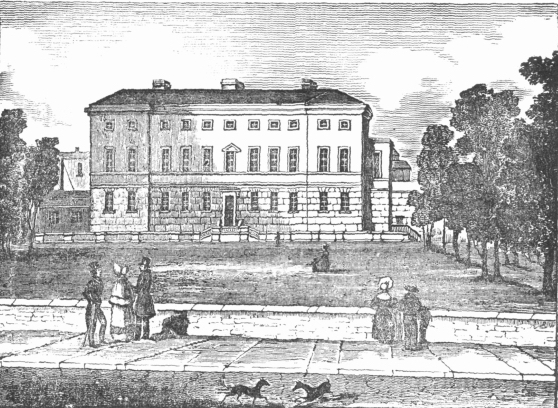
Royal Dublin Society grew to become the basis of the collection that assembled into the core of one of the three institutions that make up the National Museum of Ireland. The ideas that were developed in the primitive stages of museum development were the basic values and concepts that carried through as foundations of current museums in Ireland and Europe.
Visit the National Museum of Ireland to see what the Royal Dublin Society grew into:
Museo Nacional de Ciencias Naturales – 1771
By Francesca Long
The Ashmolean Museum in Oxford, England, first opened its doors to the public in 1683 and boasted a varied collection (History of the Ashmolean). Despite this early foray into public admittance to a museum, the first true science museum in Europe was the Museo Nacional de Ciencias Naturales in Madrid, Spain: opened between 1771 and 1772 by King Carlos III (National Museum of the Natural Sciences).
The original collection belonged to a wealthy merchant and businessman, Pedro Franco, who refused to sell it despite numerous offers; rather he chose to donate his objects to the King on the provision that they would be made available to the public (History of Madrid’s National Science Museum in 1 Minute). Initially called the Royal Cabinet of Natural History, this science museum follows a common trajectory from cabinet of curiosity to full-fledged science institution. Fittingly, Krefft (2008) states that, “the interest which all classes take in Natural History, has gradually changed the old fashioned curiosity shop of fifty years ago, into useful Museums – where rational amusement, combined with instruction, is offered to the mass of the people” (pp. 209).
The collection belonging to Franco, the basis for the Museo Nacional de Ciencias Naturales, is one of many procured during the Renaissance: “the scope of the major collections assembled in this period is indicative of the wide interests of these Renaissance scholars, men who strove to be uomini universali” (Bedini, 1965, pp. 8). Uomini universali literally translates to “universal man” in Italian and refers to the new desire of wealthy individuals to show how worldly and prosperous they are through their collections of interesting objects and artworks; it was certainly true that “culture, connoisseurship and ostentatious display began to be used to support the positions of the dominant merchants to underline their economic power” (Hooper-Greenhill, 1992, pp. 24). As Bedini (1965) states, “the evolution from private cabinets into museums as public centers of research and learning was considerably influenced by the natural philosophers of that time, the same men who simultaneously supported the newly developing scientific academies” (pp. 8). It is fortunate for the modern museum-goer that some of these wealthy merchants were also passionate about furthering scientific study and public knowledge. It is because of these vast collections of curious objects and a desire to make them accessible to the masses that science museums as recognized today were able to come into existence so early.
Visit the Museo Nacional de Ciencias Naturales website for another look at their institution.

The Founding of the Louvre Museum – 1793
By Katie Sheeran
As France was rising from the ashes of their bloody revolution, the new government decided that the people had a right to access their culture and history (Bordenstein, 2011, p. 289). To that end the Louvre, which was already a sort of private museum, was opened to the public on August 10, 1793. Prior to that the Louvre had been palace which was home to the French royal court for centuries. It was last used as such in the late 17th century, after which the court moved to Versailles. With the Enlightenment of the 18th century, the palace became the home of much of the royal art collection. Charles-Claude Flahaut de la Billaderie the comte d’Angiviller, an advisor to King Louis XVI, championed the idea of growing the collection and putting it all on display for others to view and appreciate (Encyclopedia Britannica, 2018). D’Angiviller’s vision was not realized until the monarchy’s violent fall from power.
The revolutionary government took care to collect what art and cultural artifacts they could, making it a priority to preserve their national heritage in the midst of the carnage. The existing collection at the Louvre was nationalized with the king’s deposition and arrest in August 1792 and exactly a year later the museum was opened to the public (Rodini). The founding of the Louvre perfectly exemplifies the way the Enlightenment forced many a private museum to open for the masses. Culture and learning was no longer solely for the well heeled elite, the common people would benefit from those museum’s wealth as well. It was a period of democratization for museums, some even calling visits to the Louvre a ” ritual of citizenship” (Rodini). It’s almost fitting that the French people founded an institution geared toward education and equality within the palace of the monarchs who had denied them those rights previously.

Louvre Museum, 19th Century (Encyclopedia Britannica) 
“View of the Cour Napoléon with the pyramid completed in 1989 by I. M. Pei, Musée du Louvre, Paris ” ( Rodini)
Further Reading
History Channel: Louvre Museum Opens
20th Century
Monuments Program – 1943
By Katie Sheeran
In the middle of World War II, on June 23rd, 1943, United States president Franklin D. Roosevelt approved the establishment of the “American Commission for the Protection and Salvage of Artistic and Historic Monuments in War Areas,” also known as “The Roberts Commission” with the intention to mobilize museum professionals to help the US military protect and preserve art and cultural works in areas of Europe held by the Allied forces (Bompane, 2010). To further that goal, the Allied forces established the Monuments, Fine Arts, and Archives Program (MFAA), a military unit with the express purpose of searching for looted art and cultural artifacts while also protecting sites and pieces that were still in danger of being plundered. These extraordinary measures were being taken in response to the Nazi looting campaign which was unparalleled in its scale and sophistication. The Nazi forces were indiscriminate in what they plundered, only after the fact would they decide what works were valuable and worth keeping, and which ones were representative of “degenerate” and “inferior” cultures (Feliciano, 2006). The undesirable pieces were unceremoniously destroyed. While looting in the midst of war was not an uncommon occurrence, the Nazis’ systematic pillaging of art and cultural works was something entirely different. It was intended not only to impoverish their enemies, but also to deprive them of their culture, their history, their very identity.
Hundreds of individuals worked to combat this assault on cultural heritage. The ranks of the MFAA included artists, archivists, historians and museum curators, both men and women, from thirteen countries. They were commonly known as “Monuments Men,” a term which has been the title of several books and a film about their wartime efforts (Bowling and Moske, 2014). Until recently they were very much the unsung heroes though in their time they earned widespread approbation. US Army General, and future United States president, Dwight D. Eisenhower was a firm proponent of the MFAA’s work, stating to his commanders that the art, monuments and cultural heritage sites “symbolize to the world all that we are fighting to preserve” (Eisenhower in Bompane, 2010). The work of the MFAA continued long after the fighting ended as they worked to uncover the hidden repositories of looted art that the Nazis had left in mines, caves, train tunnels and even in the famous Neuschwanstein Castle (Bowling and Moske, 2014). Over 1,400 Nazi hoards were identified and over 15 million objects were recovered (Bompane, 2010). Even to this day new stashes are discovered and with each discovery, work begins again to reunited the pieces with their rightful owners or their families. Over 100,000 pieces remain unaccounted for. That is billions of dollars of art and artifacts that may have been destroyed but may also be somewhere out in the world, perhaps in a private gallery or perhaps still in a mine somewhere. Because of this uncertainty, modern museums have a duty to investigate pieces of questionable provenance that they discover. With so much still missing, the museum world will likely still be dealing with the discovery and restitution of looted works over a century after the end of the Third Reich.

“Bavarian Mission: At Schloss Neuschwanstein in southern Bavaria, Captain James Rorimer, who later would become the director of the Metropolitan Museum of Art, supervises the safeguarding of art stolen from French Jews and stored during the war at the castle (April-May, 1945). United States Army Signal Corps Image. (Photo Credit: USAMHI)” (The Art of War and the War of Art)
Further Reading
Monuments Men and the National Gallery of Art
Monuments Men Foundation for the Preservation of Art
Letters detail adventures, boredom of Monuments Men recovering art stolen by German Nazis
European Museums Today
Network of European Museums Organization (NEMO) – 1992
By Carley Roche
With 44 countries making up Europe there is a diverse spread of culture, history, and achievements. Museums preserve and exhibit these aspects of Europe for locals and visitors alike. In 1992, the Network of European Museums Organisations (NEMO) was founded to connect museums within member states of the Council of Europe. The mission of NEMO is simple yet strong, “NEMO ensures museums are an integral part of European life by promoting their work and value to policy makers and by providing museums with information, networking, and opportunities for cooperation” (NEMO, 2019).

NEMO aims to succeed in four key areas: Collection Value, Educational Value, Social Value, and Economic Value. Collections are an integral part of all museums, but unfortunately not all museums have the resources to properly care for their collections. NEMO promotes communication between museums to better collection care and good practices. Many Western museums, including those in Europe, saw a shift in priorities during the 20th century with education moving to the forefront. NEMO strives to make museums recognized support to educational systems across the continent. Museums have a voice and a strong one when listened to. NEMO wants the social impact of museums to be heard, recognized, and enjoyed by their communities. Finally, museums attract visitors from all over the world which means they are also economic powerhouses for their communities and for developing areas. In 2018 The Louvre alone recorded over 10 million visitors. NEMO wants museums to be seen as a benefit to finances rather than an institution taking resources away from the community.
In 2018 NEMO began to focus on digitization in European museums. NEMO is pushing for its members to adopt the Digital Agenda of the European Union (EU), which “proposes to better exploit the potential of Information and Communication Technologies (ICTs) in order to foster innovation, economic growth, and progress” (European Commission, n.d.). At the moment the Digital Agenda does not recognize museums as a strong digital source for information. However, NEMO hopes that as museums continue to utilize modern technologies, digitize their collections, and increase digital knowledge that museums will be acknowledged as incredibly rich resources of knowledge in the digital age.
NEMO connects and communicates with museums across Europe. Their goal is transferring knowledge between museums and the EU through networking, international exchanges, newsletters, training courses, and webinars. NEMO understands the impact European museums have on society, history, and culture today and works to make museums recognized as a leader in education and information.
Europeana – 2008
By Carley Roche
Europeana Collections is an online platform that brings together over 50 million items from the digital collections of museums, archives, galleries, and libraries from all across Europe. The mission driving Europeana is: “We transform the world with culture. We build on Europe’s rich cultural heritage and make it easier for people to use for work, learning, or pleasure. Our work contributes to an open, knowledgeable, and creative society” (Europeana Collections, 2019). Digitization continues to grow in the cultural heritage sector and so it is important to have a centralized portal that can preserve and share a large quantity of items.

Europeana officially launched to the public on November 20, 2008. Created, in a way, as a European answer to Google the digital platform has expanded over the past decade into a collaboration of shared heritage from diverse backgrounds. Europeana houses media such as audio, books, photographs, maps, fashion, newspapers, and much more in order to educate and to also simply bring joy to visitors.
While successful in collecting and preservation Europeana has met a few road bumps throughout its history. One of the biggest issues with the platform is its incredible size. Speaking with Stefan Rohde-Enslin, lead programmer of museum-digital a German digital aggregator, he said Europeana feels disconnecting to many smaller museums. Using Germany as an example, he explained that while Germany does indeed have a connected history to the rest of Europe there are digital platforms at the federal and local level that can better care for German history. For example the German Digital Library or even his own museum-digital, which creates portals for each individual state within the country. Taking on an entire continent’s history, culture, achievements, and losses is a daunting task; this is especially true for a continent as rich and diverse as Europe.
Still it should be noted that Europeana has done an incredible job over the last ten years especially with creating the European Data Model (EDM). The EDM works to fix the problem that museums across Europe will use different types of metadata when creating inventory for their collections. The EDM standardizes data so that it can be efficiently uploaded into Europeana’s servers while allowing for better search results within the portal. A digital aggregator of Europeana’s size was bound to meet technical difficulties, but standardizing metadata creates a smooth standardized service for everyone involved.
Conclusion
Throughout European history, museums and museum programs have evolved from niche, private collections and secret organizations to global institutions dedicated to preservation, collection, and education. Thank you for visiting our exhibition!
References (A-Z)
Bedini, S. (1965). The Evolution of Science Museums. Technology and Culture,6(1), 1-29. doi:10.2307/3100949
Bodenstein, F. (2011). National Museums in France. In Building National Museums in Europe 1750-2010. Retrieved June 1, 2019, from http://liu.diva-portal.org/smash/get/diva2:450373/FULLTEXT01.pdf
Bompane, M. (2010, June 16). The Art of War and the War of Art. Retrieved from https://www.army.mil/article/40945/the_art_of_war_and_the_war_of_art
Bowling, M., & Moske, J. (2014, January 31). In the Footsteps of the Monuments Men: Traces from the Archives at the Metropolitan Museum. Retrieved from https://www.metmuseum.org/blogs/now-at-the-met/2014/in-the-footsteps-of-the-monuments-men
Collections & Research. (n.d.). Retrieved from https://www.museum.ie/The-Collections.
Ecsite. (n.d.). Public consultation on Europeana. Retrieved from http://www.ecsite.eu/activities-and-services/news-and-publications/public-consultation-europeana
Encyclopedia Britannica. (2018, April). Louvre Museum. In Encyclopedia Britannica. Retrieved June 1, 2019, from https://www.britannica.com/topic/Louvre-Museum
Europeana. (n.d.). The European data model for cultural heritage. Retrieved from https://pro.europeana.eu/files/Europeana_Professional/Share_your_data/Technical_requirements/EDM_Documentation/EDM_Factsheet.pdf
European Collections. (2019). Our mission. Retrieved from https://pro.europeana.eu/our-mission
Europeana Collections. (2019). Welcome to Europeana Collections. Retrieved from https://www.europeana.eu/portal/en/about.html
Findlen, P. (2012). The Museum: Its Classical Etymology and Renaissance Geneology. In Carbonell, B.M. (ed.), Museum Studies: An Anthology of Contexts, (pp. 23-45). London, UK: Blackwell Publishing.
Griffith, L. M. (2014). Front of Trinity College Dublin from Charles Brooking’s Map of Dublin, 1728. [Image]. Retrieved from https://www.irishtimes.com/culture/books/behind-the-facades-an-alternative-history-of-dublin-1.1967496.
Hagedorn-Saupe, M. (2008). Digitization in European museums. Newsletter of the Network of European Museum Organisations (1). Pp. 1. Retrieved from https://www.ne-mo.org/fileadmin/Dateien/public/NEMONews/NEMOnews2008_1.pdf
Hardy, D. (1835). Royal Dublin Society. The Dublin Penny Journal, Vol. 4(No. 174). Retrieved from https://www.jstor.org/stable/30003567.
History of the Ashmolean. (n.d.) Ashmolean Museum of Art and Archeology, University of Oxford. Retrieved from https://www.ashmolean.org/history-ashmolean
Hooper-Greenhill, E. (1992). Museums and the Shaping of Knowledge. London, UK: Routledge.
Krefft, G. (2008). The Improvements Effected in Modern Museums of Europe and Australia. In H. H. Genoways and M. A. Andrei, (Eds.) Museum Origins: Readings in Early Museum History and Philosophy (pp. 209-216). Walnut Creek, CA: Left Coast Press, Inc.
Luty, J.. (2019, Aug. 9). Leading 20 museums in Europe in 2018, based on attendance (in 1,000s). Retrieved from https://www.statista.com/statistics/747942/attendance-at-leading-museums-in-europe/
MacGregor, A. (2001). The Ashmolean as a Museum of Natural History, 1683-1860. Journal of the History of Collections, 13 (2), pp. 125-144. Retrieved from https://academic-oup-com.proxy1.library.jhu.edu/jhc/article/13/2/125/626639
National Museum of Natural Sciences. (n.d.) Madrid Official Tourism Website. Retrieved from https://www.esmadrid.com/en/tourist-information/museo-nacional-de-ciencias-naturales?utm_referrer=https%3A%2F%2Fwww.google.com%2F
NEMO. (2019). About NEMO. Retrieved from https://www.ne-mo.org/about-us.html
NEMO. (2003). Europe through the eyes of museums. Retrieved from https://www.ne-mo.org/museums-europe.pdf
NEMO. (2019). Our Actions. Retrieved from https://www.ne-mo.org/our-actions.html
NEMO. (2019). Our Aims. Retrieved from https://www.ne-mo.org/our-aims.html
North, M. (2008) Republican Art? Dutch and Swiss Art and Art-Production Compared. In Holenstein, A., Malssen, T., & Prak, M.R. (eds.), The Republican Alternative: The Netherlands and Switzerland Compared, pp. 193-233. Amsterdam, The Netherlands: Amsterdam University Press.
Our Three Venues. (2019). Kunstmuseum Basel. Retrieved from https://kunstmuseumbasel.ch/en/museum/our-three-venues
RDS History. (n.d.). Retrieved fromhttps://www.rds.ie/Ireland-s-Philanthropic-Society/Membership/RDS-History.
Rodini, E. (n.d.). Museums and politics: The Louvre, Paris. Retrieved June 1, 2019, from https://www.khanacademy.org/humanities/art-history-basics/beginners-art-history/a/museums-politics-louvre
Rohde-Enslin, S. (2019, July 23). Personal Interview.
Sawyer, A. (2011). Building National Museums in Europe 1750-2010: Conference Proceedings from EuNaMus, European National Museums: Identity Politics, the Uses of the Past and the European Citizen, Bologna 28-30 April 2011 (pp. 435-460). Linköping, Sweden: Linköping University Electronic Press.
The Editors of Encyclopaedia Britannica. (n.d.). Ashmolean Museum of Art and Archaeology. Retrieved from https://www.britannica.com/place/Oxford-England
The History of Madrid’s National Science Museum in 1 Minute. (2016, June 11). Culture Trip. Retrieved from https://theculturetrip.com/europe/spain/articles/the-history-of-madrids-natural-science-museum-in-1-minute/
The world’s oldest museums. (2014). Museums.Eu: The European Museums Network. Retrieved from http://museums.eu/highlight/details/105317/the-worlds-oldest-museums
 Museums of Europe: A History